ABOUT ME
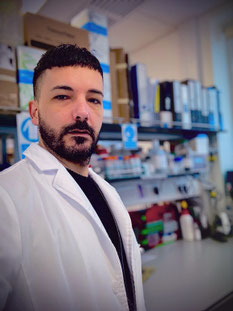
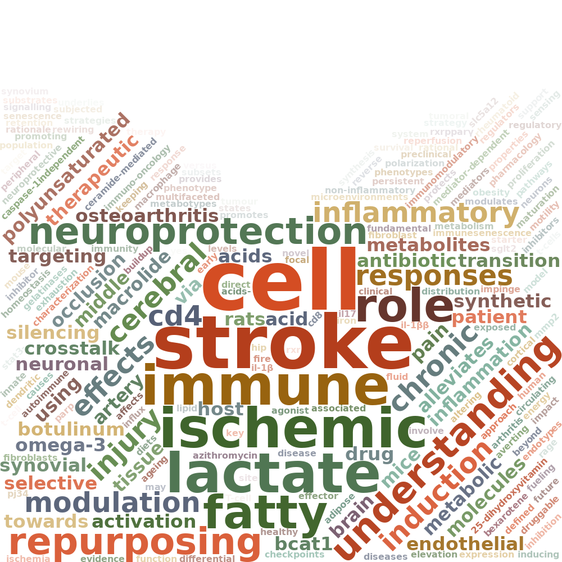
Dr. Michelangelo Certo is a distinguished researcher at the forefront of inflammation and metabolism. He earned his MSc in Pharmaceutical Chemistry and Technology with honours in 2010, followed by a PhD in Cellular Biochemistry and Pharmacology in 2013, both from the University of Calabria, Italy. His early research at the Centre of Preclinical and Translational Pharmacology focused on unravelling the intricate interplay between the immune system and the brain during ischemic injury, with the goal of identifying groundbreaking immunotherapeutic strategies for stroke.
Recognized for his expertise in Pharmacology by the Department Council at the School of Pharmacy, University of Calabria in 2015, Dr. Certo soon after secured a prestigious Research Fellowship from the Italian Society of Pharmacology. This opportunity led him to University College London, where he expanded his research into the realm of chronic pain, applying his deep understanding of inflammatory pathways to uncover novel therapeutic targets.
Throughout his career, Dr. Certo has been driven by a passion for decoding the inflammatory mechanisms that govern immunity, with a strong emphasis on translational medicine. His work spans cell trafficking, target identification, therapeutic exploitation, and the development of reparative and regenerative therapies. In 2017, he transitioned to Barts and The London School of Medicine and Dentistry at Queen Mary University of London, where he explored the metabolic regulation of immune cell function and the role of key metabolites—such as lactate and fatty acids—as powerful signaling molecules in immune-inflammatory responses.
In 2018, Dr. Certo joined the College of Medicine and Health at the University of Birmingham, where he currently serves as a Senior Research Scientist in Metabolism and Inflammation. His research delves into the complex crosstalk between metabolic and inflammatory pathways, investigating their roles in stroke (funded by the University of Birmingham) and chronic inflammatory diseases, including atherosclerosis (funded by the British Heart Foundation) and Sjögren's syndrome (funded by the Medical Research Council). In addition to his research, he also serves as BMSU Departmental Lead, playing a pivotal role in advancing biomedical research and innovation within the university.
With a career dedicated to bridging fundamental research and therapeutic applications, Dr. Certo continues to push the boundaries of knowledge in inflammation, metabolism, and disease intervention.
Current Research Project
Technical Skills and Expertise
Murine Models & In Vivo Techniques
- Holder of a Home Office Personal Licence (IF9D75154) – Categories A, B, and C
-
Extensive experience in animal handling, breeding, and procedural techniques,
including:
- Various injection techniques (intravenous, intraperitoneal, subcutaneous)
- Anaesthesia administration and monitoring
- Surgical procedures and microsurgery
- Middle Cerebral Artery Occlusion (MCAo) model for stroke research
- Cannulation of salivary glands for studying glandular function
- Perfusions for tissue preservation
- Blood and tissue collection for downstream analyses
- Necropsy and organ harvesting
Cell Culture & Immunological Techniques
- In vitro culture of primary human and murine lymphocytes and macrophages
- Isolation of Peripheral Blood Mononuclear Cells (PBMCs)
- Enzymatic digestion of tissues for single-cell suspension preparation
Microscopy & Imaging
- Light, fluorescence, and confocal microscopy for cellular and tissue analysis
- Advanced image acquisition and processing techniques
Histology & Tissue Analysis
- Cryostat and paraffin-embedded sectioning for histological examination
- Immunohistochemistry and immunofluorescence for protein expression analysis
- In situ zymography for detecting enzymatic activity in tissues
Molecular Biology & Biochemistry
- DNA, RNA, and protein isolation and analysis
- Gel electrophoresis (agarose & SDS-PAGE) and Western blotting techniques
- Immunoprecipitation and cell fractionation
- Enzyme-Linked Immunosorbent Assays (ELISA) for biomarker quantification
Laboratory Instrumentation & Research Tools
- Seahorse XF Analyzer for metabolic flux analysis
- BOND-MAX system for automated immunohistochemistry
- Spectrophotometry and autoanalyzer for biochemical assays
- Microtome and cryostat for precise tissue sectioning
- X-ray equipment for imaging and analysis
- Familiarity with pH meters, centrifuges, incubators, and darkroom equipment
Data Analysis, Programming & Scientific Communication
- Data processing and statistical analysis using GraphPad Prism, R, and Python
- Scientific illustration and visualisation of complex data for presentations and publications
- Database management and bioinformatics applications
- Experimental design and interpretation in biomedical research
- Science communication, including writing peer-reviewed publications, presenting findings at conferences, and engaging with lay audiences through models, charts, and graphics